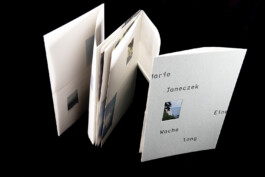
Eine Woche lang
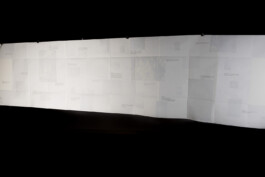
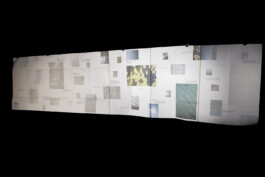
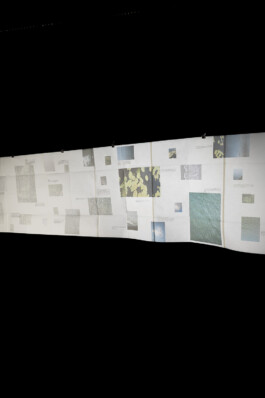
Bachelor-Thesis, 2026, 640 x 2640 mm, Inkjet printer, 6 pcs
The water is completely still. I go in, but can’t swim because it only stays waist-deep everywhere. I walk further and further out, no change. I just can’t fully immerse myself. I try to swim a few meters in the shallow water, halfway. Not quite how I imagined it. After that we play Mau Mau, I lose. I stand up again and look out over the Baltic Sea - beautiful. (translated)
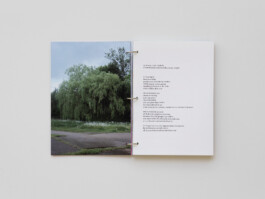
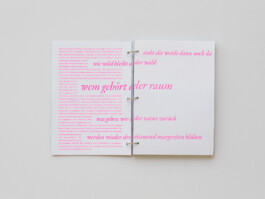
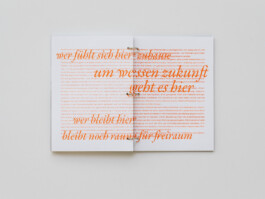
Eine Woche lang is an experimental book project combining photography and diary entries. It began with a stay on the island of Rügen. The book explores themes such as spatial orientation, home, estrangement, East–West identity, nature and places as sites of memory, as shaped by personal perception.
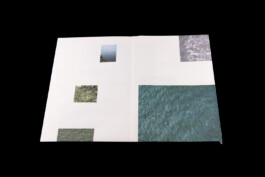
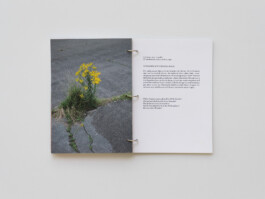
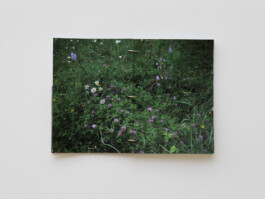
Around 400 photographs were taken during this time, primarily of natural subjects such as the sea, forest, sky and bodies of water. At first glance, these images convey calmness, familiarity and continuity. At the same time, however, I experienced the places and people with a sense of distance, as though I were a visitor. Alongside this, I recorded my perceptions and thoughts in diary entries. These texts speak of non-belonging, observation, and emotional distance. This contrast creates a tension that forms the conceptual basis of the project.
The project explores the different qualities of the two media. While photography captures a moment in time, making it visible, the diary is fragmentary and constructed. Both open up spaces for memory and association.
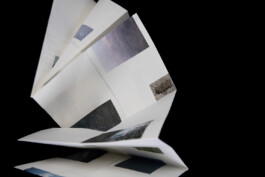
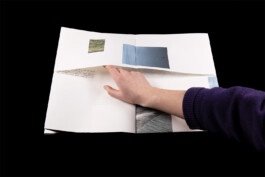
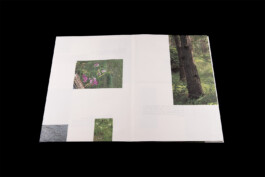
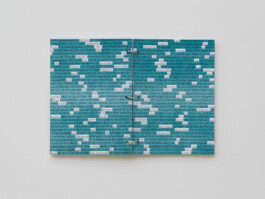
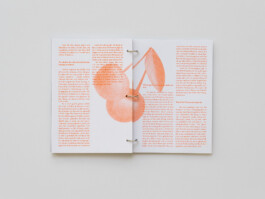
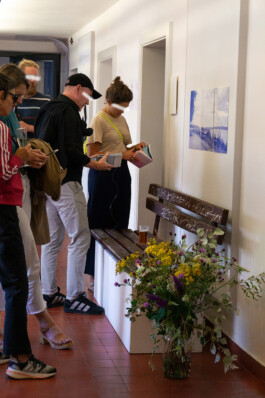
This relationship is formally manifested in the folded book body, which is made from a single continuous sheet of paper. The double fold creates an inside and an outside, as well as visible and hidden areas. Photographs appear on the exterior, while diary entries occupy the interior. The content only reveals itself through the act of unfolding. Receiving the work becomes a physical process in which the book is experienced through movement. The folds structure the content and transform the flat surface into a spatial form.
Photography and the written word are connected not only spatially, but also conceptually, through the folded structure. The white space, the translucency of the paper and the act of unfolding all serve to deepen the exploration of in-between spaces. The fold connects time and space, photography and diary.